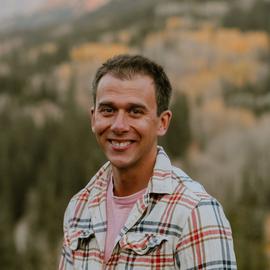
Biography
I am an adjunct faculty member in Oregon State University’s College of Earth, Ocean, and Atmospheric Sciences. Prior to joining OSU, I was a Research Physical Scientist in the Freshwater Ecology Branch of the U.S. Environmental Protection Agency’s Pacific Ecological Systems Division in Corvallis, Oregon.
My research focuses on understanding physical and biological processes in river systems using large-scale and high-resolution topographic and imagery datasets, along with field observations and numerical modeling.
I have ongoing projects that seek to understand the impacts of large dams on the geomorphology, ecology, and land cover of the Colorado River corridor through the Canyonlands and Grand Canyon regions of the Southwestern U.S. I’m particularly interested in whether, and over what timescales, areas formerly inundated by reservoirs will undergo geomorphic and ecological recovery as water levels in those reservoirs decline in response to a changing climate and long-term drought. In addition to these field-based projects, I’ve conducted laboratory and numerical modeling studies of river response to altered hydrology and sediment supply.
Prior to joining the EPA, I was a faculty member in the Department of Geosciences at Fort Lewis College in Durango, Colorado. I additionally held a faculty appointment as a hydrologist with the U.S. Geological Survey’s Grand Canyon Monitoring and Research Center in Flagstaff, Arizona.
For more information:
Get in touch at kaspraka@oregonstate.edu
- Remote Sensing
- Eco-Geomorphology
- River Restoration
-
PhD Watershed Science, 2015
Utah State University
-
MS in Earth Science, 2010
Dartmouth College
-
BS in Geology/Geophysics, 2008
Boston College
Featured Publications
For a complete list, see my CV at the top of the page
Contact
- kaspraka@oregonstate.edu
- Corvallis, OR 97330